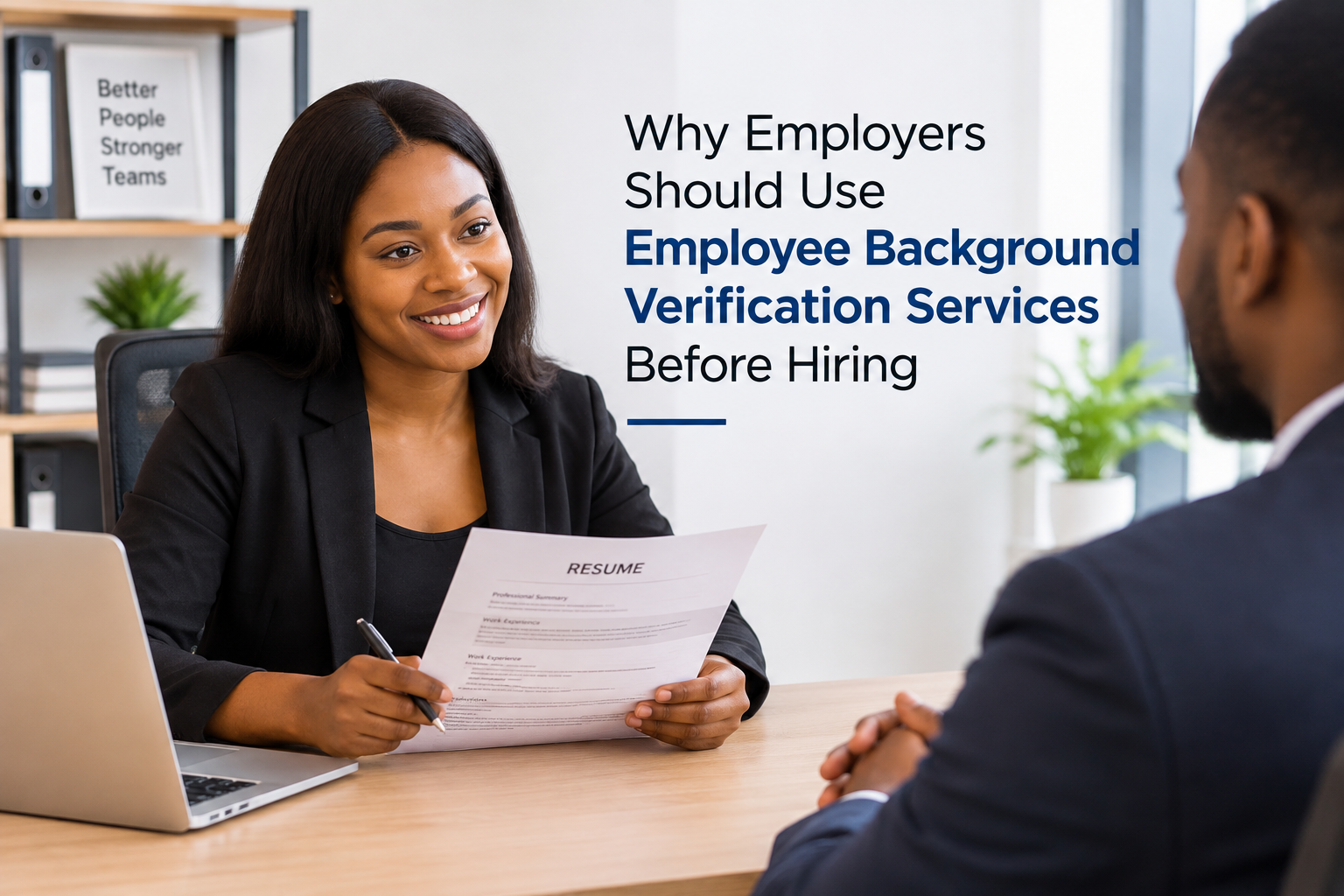
A candidate walks into an interview with an impressive CV, excellent qualifications, and years of experience. They answer every question confidently, communicate well, and seem like the perfect addition to your team. You make the offer and only later discover that some of the information they provided was inaccurate.
The problem? By then, you’ve already invested time, money, and trust in the hiring process.
This is one reason more businesses are paying closer attention to employee background verification services. Hiring is about more than finding someone who looks good on paper. Employers also need reasonable confidence that a candidate’s identity, qualifications, experience, and other relevant information can be verified before making an important hiring decision.
A Great CV Doesn’t Always Tell the Full Story
A CV is often the first thing an employer sees, but it is still a document created by the candidate. While many applicants provide accurate information, employers cannot simply assume that every detail is correct.
A candidate might exaggerate their responsibilities at a previous job, provide an incorrect employment date, claim a qualification they did not earn, or leave important information out entirely.
This doesn’t necessarily mean every applicant is being dishonest. It simply means that verification is different from assumption.
For employers, checking important information before hiring can provide greater confidence when choosing between candidates.
The Cost of Hiring the Wrong Person Can Be More Than You Expect
What happens when a new employee turns out to be unsuitable for the role?
The obvious cost is the salary you’ve already paid. But the impact can extend much further. Your business may also lose time during recruitment, onboarding, and training. Other employees may have to take on additional responsibilities, productivity can suffer, and you may eventually need to restart the hiring process.
For smaller businesses especially, a poor hiring decision can place significant pressure on limited resources.
Background verification doesn’t eliminate every hiring risk, but it can help employers make decisions based on verified information rather than assumptions.
What Can Employers Verify?
The exact checks depend on the role, organisation, and applicable laws or policies. However, employers may consider verifying information such as identity, employment history, educational qualifications, professional credentials, and references.
For certain positions, additional checks may also be appropriate where legally permitted and relevant to the responsibilities of the role.
The key is not simply to conduct as many checks as possible. Instead, employers should identify the information that genuinely matters for the position and verify it appropriately.
Why Employee Background Verification Services Can Make Hiring Easier
Conducting checks internally can take considerable time, particularly when an organisation is hiring several people or has limited HR resources.
This is where professional employee background verification services can become useful.
Rather than expecting an HR team to manually contact different institutions, previous employers, or referees for every candidate, a professional verification provider can help organise and manage the process.
This can make the hiring workflow more structured while allowing HR teams to focus on other important responsibilities, such as interviewing candidates, onboarding new employees, and improving employee experience.
Background Checks Can Help Protect Workplace Trust
Hiring isn’t only about protecting the business. It is also about protecting the people who already work there.
Employees expect their organisation to make responsible hiring decisions. Bringing someone into a sensitive role without properly verifying relevant information could create unnecessary concerns for the wider team.
A thoughtful verification process can demonstrate that an employer takes recruitment seriously and values a trustworthy working environment.
Of course, background checks should always be conducted fairly, consistently, and in accordance with applicable privacy and employment laws. Employers should also ensure that candidates understand what checks are being conducted where required.
When Should Employers Consider Background Verification?
Background verification can be particularly useful when hiring for positions involving sensitive information, financial responsibilities, access to company systems, leadership responsibilities, or direct interaction with customers and clients.
However, that doesn’t mean only large organisations need verification.
Small businesses can benefit too. In fact, when a company has a small team, every hiring decision can have a significant impact. Taking reasonable steps to verify important candidate information may help a growing business avoid preventable recruitment problems.
Verification Should Support Your Hiring Process—Not Replace It
It is important to remember that background verification is only one part of recruitment.
A verified employment history doesn’t automatically mean someone is the right person for your organisation. Employers should still consider skills, experience, communication, cultural fit, interview performance, references, and the specific requirements of the role.
Think of verification as another piece of the puzzle.
The goal is to give employers more reliable information so they can make better-informed hiring decisions.
Don’t Wait Until After the Hire to Start Asking Questions
Recruitment decisions can have long-term consequences. By the time an employer discovers that important information on a candidate’s application was inaccurate, the hiring process may already be complete.
Taking verification seriously before making an offer can help employers approach recruitment with greater confidence.
The best hiring decisions aren’t necessarily about finding the candidate with the most impressive CV. They’re about understanding who the candidate is, confirming relevant information, and determining whether they are genuinely suitable for the role.
Make Verification Part of Smarter Hiring
Every employer wants to hire people they can trust. While no recruitment process can remove every risk, verifying important candidate information can give businesses a stronger foundation for making hiring decisions.
Professional employee background verification services can help employers streamline this process, save valuable HR time, and gain greater confidence in the information provided by candidates.
Ultimately, hiring is an investment. Before investing in a new employee, take the time to understand exactly who you’re bringing into your organisation.