
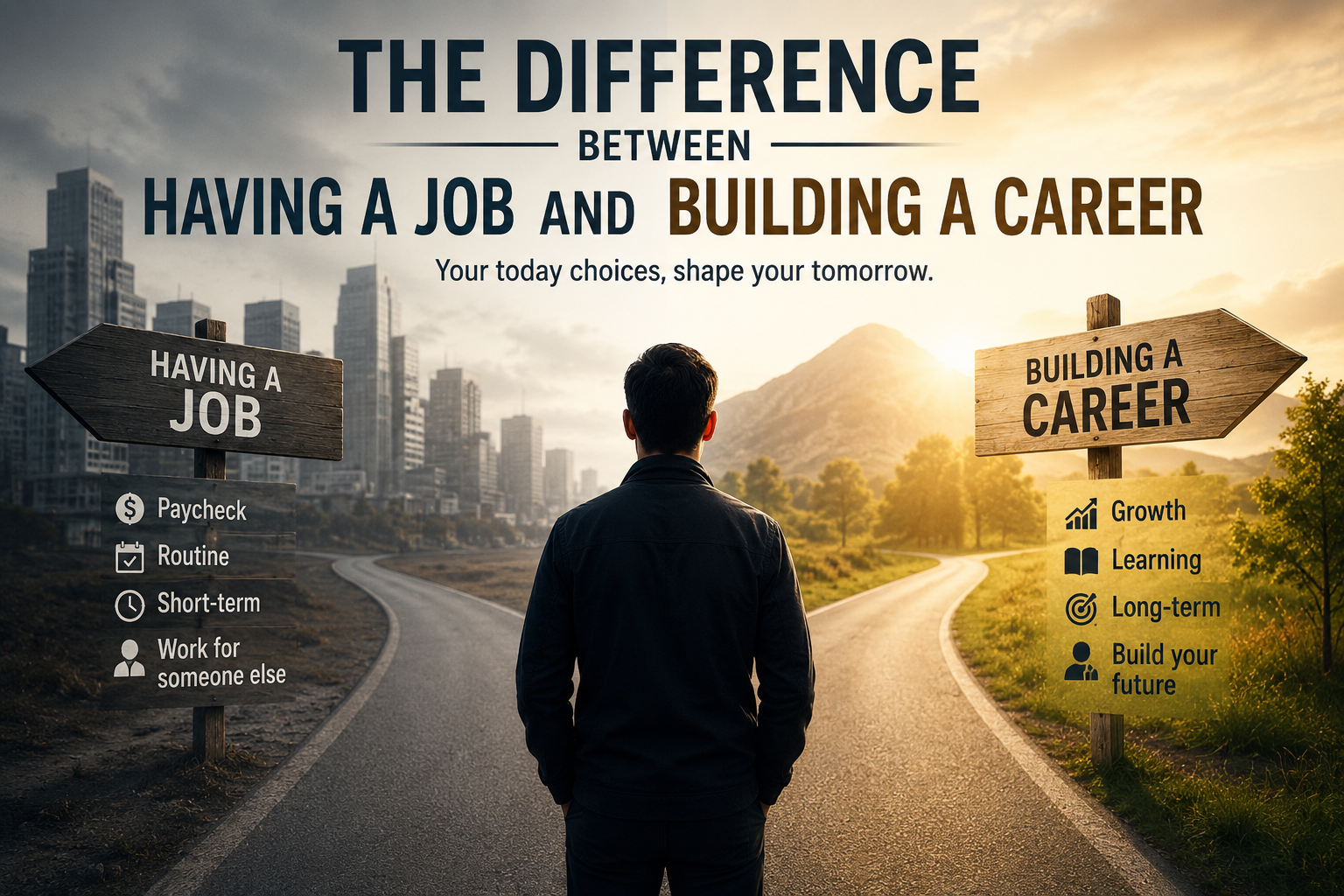
Most people don’t realize they’re building a job instead of a career until years have passed.
The paycheck is coming in, the work gets done, and life moves forward. Everything appears to be on track. Yet one day, they look around and realize they haven’t learned new skills, expanded their opportunities, or moved any closer to their long-term professional goals.
This is a reality many professionals face. They are employed, but they are not necessarily progressing. They are working, but they are not intentionally building a future.
Understanding the difference between having a job and building a career is one of the most important steps anyone can take toward long-term professional success.
Having a Job Is About Today
There is nothing wrong with having a job. In fact, employment provides financial security, stability, and valuable experience. Jobs help people support themselves, achieve personal goals, and contribute to their organizations.
The challenge arises when a job becomes the end goal rather than part of a larger professional journey.
Many professionals become so focused on their daily responsibilities that they stop thinking about where they want to be in the future. They show up, complete their tasks, and go home. Over time, this routine can create a false sense of progress. Years pass, but little changes.
A job focuses on earning an income today. A career focuses on creating opportunities for tomorrow.
Building a Career Requires Intention
Career growth rarely happens by accident.
The professionals who consistently advance are usually those who make deliberate decisions about their development. They actively seek opportunities to learn, improve their skills, and take on responsibilities that challenge them.
Rather than viewing work solely as a source of income, they see it as a platform for growth.
Every project becomes a learning experience. Every challenge becomes an opportunity to develop new capabilities. Every interaction becomes a chance to build valuable professional relationships.
People who build successful careers often ask themselves questions such as:
- What new skills am I developing?
- How is this role preparing me for future opportunities?
- What experience can I gain from this project?
- How can I become more valuable in my industry?
These questions help shift the focus from simply working to intentionally growing.
The Workplace Has Changed
The modern workplace looks very different from what it did a decade ago.
Technology continues to transform industries, new roles emerge regularly, and employers increasingly prioritize adaptability and practical skills. As a result, career development has become more important than ever.
Today, employers are not only looking for qualifications. They are looking for professionals who can solve problems, communicate effectively, learn quickly, and adapt to changing environments.
This means that career growth is no longer guaranteed by simply staying in the same role for a long period of time. Professionals must continuously invest in their knowledge and skills to remain competitive.
The future belongs to those who are willing to learn, evolve, and embrace change.
Skills Matter More Than Titles
One of the biggest mistakes professionals make is focusing too heavily on job titles.
While promotions and titles can be rewarding, they are not always the best measure of career progress.
Skills create long-term value.
Leadership skills can open doors to management opportunities. Communication skills can improve influence and effectiveness. Technical expertise can increase employability and earning potential.
A title may change when you switch organizations. The skills you develop stay with you throughout your career.
This is why successful professionals focus on becoming better, not just becoming higher.
Career Growth Is a Long-Term Investment
Building a career requires patience and consistency.
Just as financial investments grow over time, career development is often the result of small actions repeated consistently. Attending training sessions, learning new technologies, seeking mentorship, expanding professional networks, and taking on challenging assignments may not produce immediate results, but they create significant value over time.
The most successful careers are rarely built overnight. They are built through continuous learning, intentional growth, and a commitment to improvement.
Every skill learned, every challenge overcome, and every lesson gained contributes to future opportunities.
A Simple Question to Ask Yourself
At the end of each year, take a moment to reflect on your professional growth.
Ask yourself:
“Am I in a better position professionally than I was twelve months ago?”
The answer should go beyond salary increases.
Have you gained valuable skills?
Have you expanded your knowledge?
Have you taken on greater responsibilities?
Have you moved closer to your long-term goals?
If the answer is yes, you are likely building a career.
If the answer is no, it may be time to rethink your approach to professional development.
Conclusion
Having a job and building a career are not the same thing.
A job helps you earn a living, but a career helps you build a future. While both are important, only one creates lasting opportunities for growth, advancement, and long-term success.
In a world where industries are constantly evolving and skills are becoming increasingly valuable, professionals must take ownership of their development. The goal should not simply be to remain employed, but to continuously grow, learn, and position yourself for future opportunities.
The question is not whether you have a job.
The real question is whether the work you are doing today is helping you build the career you want tomorrow.