
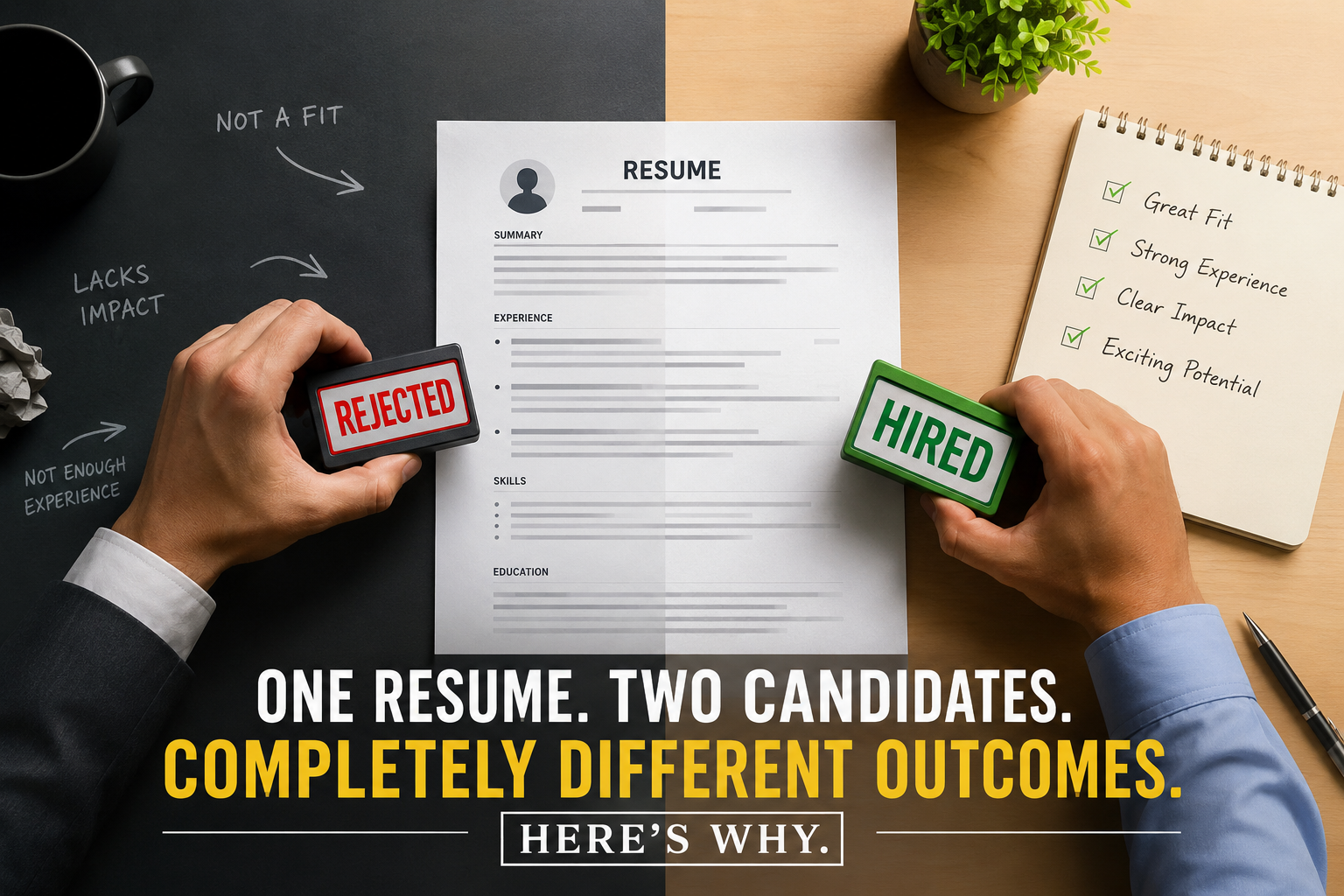
The rejection email arrived at 9:17 a.m.
“Thank you for your interest. After careful consideration, we’ve decided to move forward with other candidates.”
David had seen this message before. Too many times.
He leaned back in his chair, frustrated. Same story again apply, wait, reject, repeat. What made it worse was what he saw a few days later on LinkedIn.
Sarah, a former colleague, had just announced she got hired at the same company. Same role. Same level. Same industry.
David paused.
They had worked together. Shared similar responsibilities. Similar experience. Similar skills. In some cases, he even thought he had stronger technical depth.
So why her, and not him?
That question is where most job seekers get stuck. Because the assumption is simple: if two candidates have similar experience, they should get similar outcomes.
But hiring doesn’t work like that anymore.
Recruiters aren’t just comparing resumes. They’re comparing clarity of value.
When Sarah’s resume landed on the recruiter’s desk, it didn’t just list what she did. It showed what changed because of her.
Instead of “managed customer accounts,” she wrote: increased customer retention by 30%.
Instead of “worked on marketing campaigns,” she wrote: generated over $200K in revenue through targeted campaigns.
Every line answered one question: what impact did this person create?
Now look at David’s resume. It was accurate. Honest. Complete. But it focused on duties, not outcomes.
It described responsibilities, not results.
And in a crowded hiring process, that difference is everything.
Recruiters don’t read resumes in detail at first. They scan. Fast. They look for signals impact, growth, achievement, measurable results.
Sarah’s resume made those signals obvious in seconds.
David’s didn’t.
Not because he lacked ability. But because he didn’t translate his experience into value.
That’s the hidden truth in modern hiring: being qualified is no longer enough. Most candidates are qualified.
The real question is: can the recruiter quickly understand your impact?
Because at the end of the day, a resume is not a job history document.
It’s a value story.
And in many cases, two candidates can have almost identical experience—but completely different outcomes simply because one told their story in a way the recruiter could instantly understand.